Project 3 was the most challenging of the five. Unlike previous projects where I focused on either defining a persona or identifying areas for improvement, this project required both tasks. While I successfully pinpointed a critical problem to address, this project entailed conducting semi-structured interviews with fellow students. This offered insights into the problem from diverse perspectives. While the primary issue was identified, this process unveiled numerous underlying subproblems.
However, the presence of numerous subproblems led me to attempt to address all of them in the prototype, resulting in a vague goal. This experience taught me the importance of asking, 'Why do we need this service for this persona and this goal?' when defining services or features for inclusion in the prototype. Unfortunately, my prototype for this project did not consider this question, resulting in insufficient explanations for the implemented features.
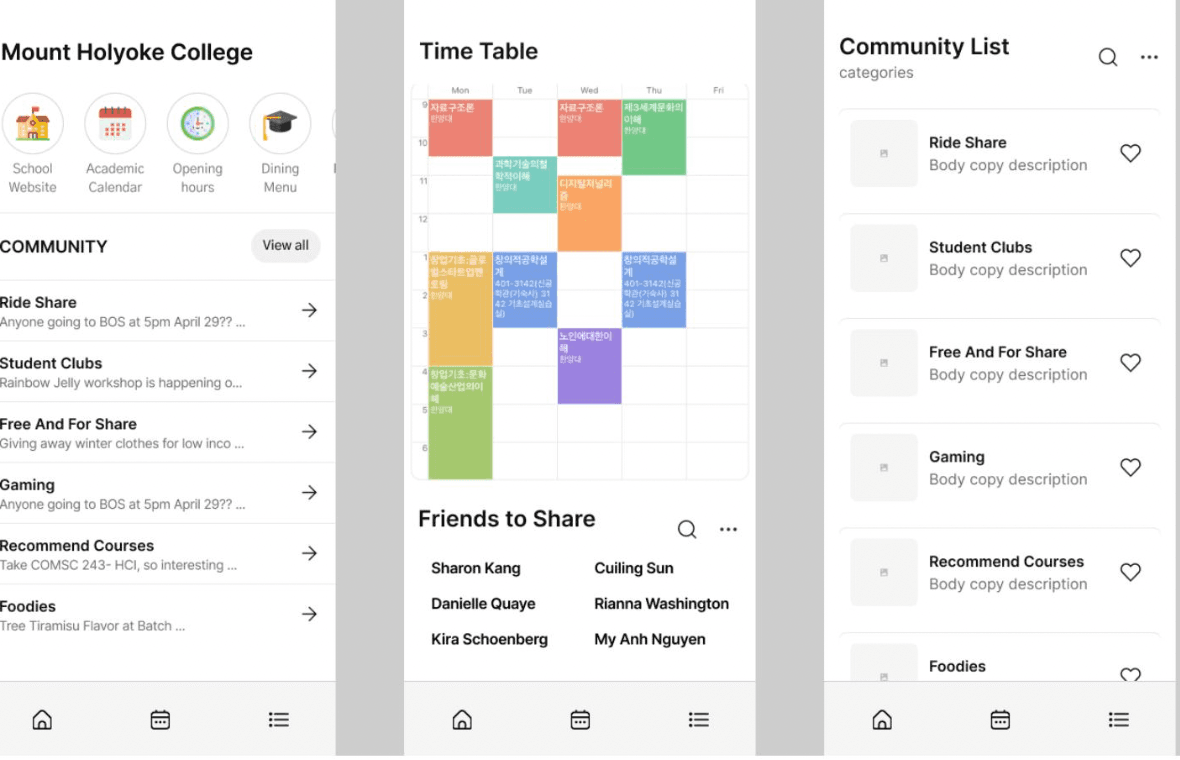
Therefore, when revisiting this project, I made a concerted effort to clarify why each feature would help address the main problem and ensured that my prototype reflected these concerns. For instance, I revamped the community lists from generic labels like 'Ride Share' and 'Free and For Sale' to 'Dancing,' 'Knitting & Crocheting,' and 'Gaming,' which better aligned with the characteristics of 'community'.
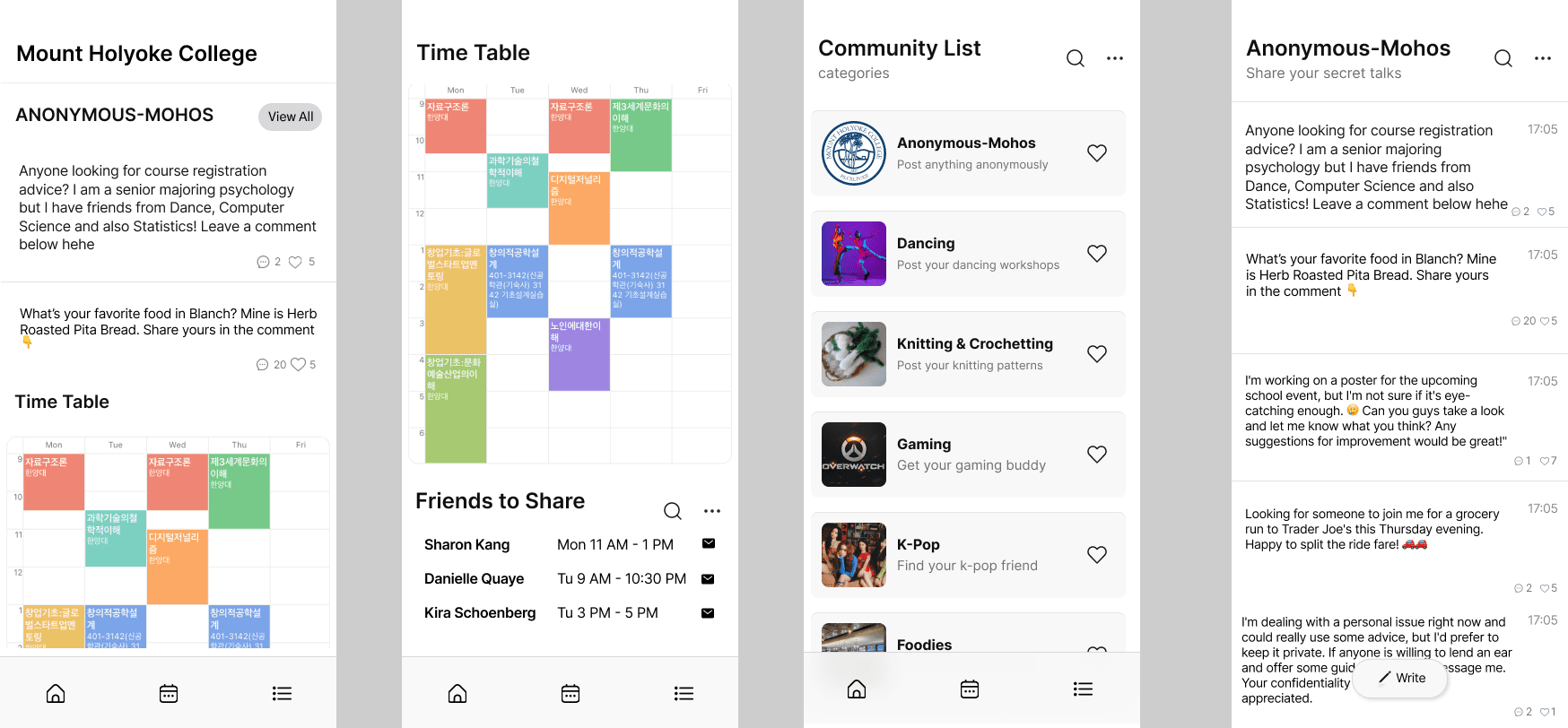
Additionally, after receiving feedback questioning the implementation of a timetable feature for an international student persona focused on making friends from diverse backgrounds, I modified the subfeature to facilitate connecting with people who share overlapping free time between classes, thereby enabling easy meet-ups for meals and potential friendships.
I initially assumed that setting one persona and one goal would guarantee a successful project outcome, but the reality was not. However, project 3 taught me that another phase is critical for my design progress: identifying subfeatures and validating the necessity of the service.