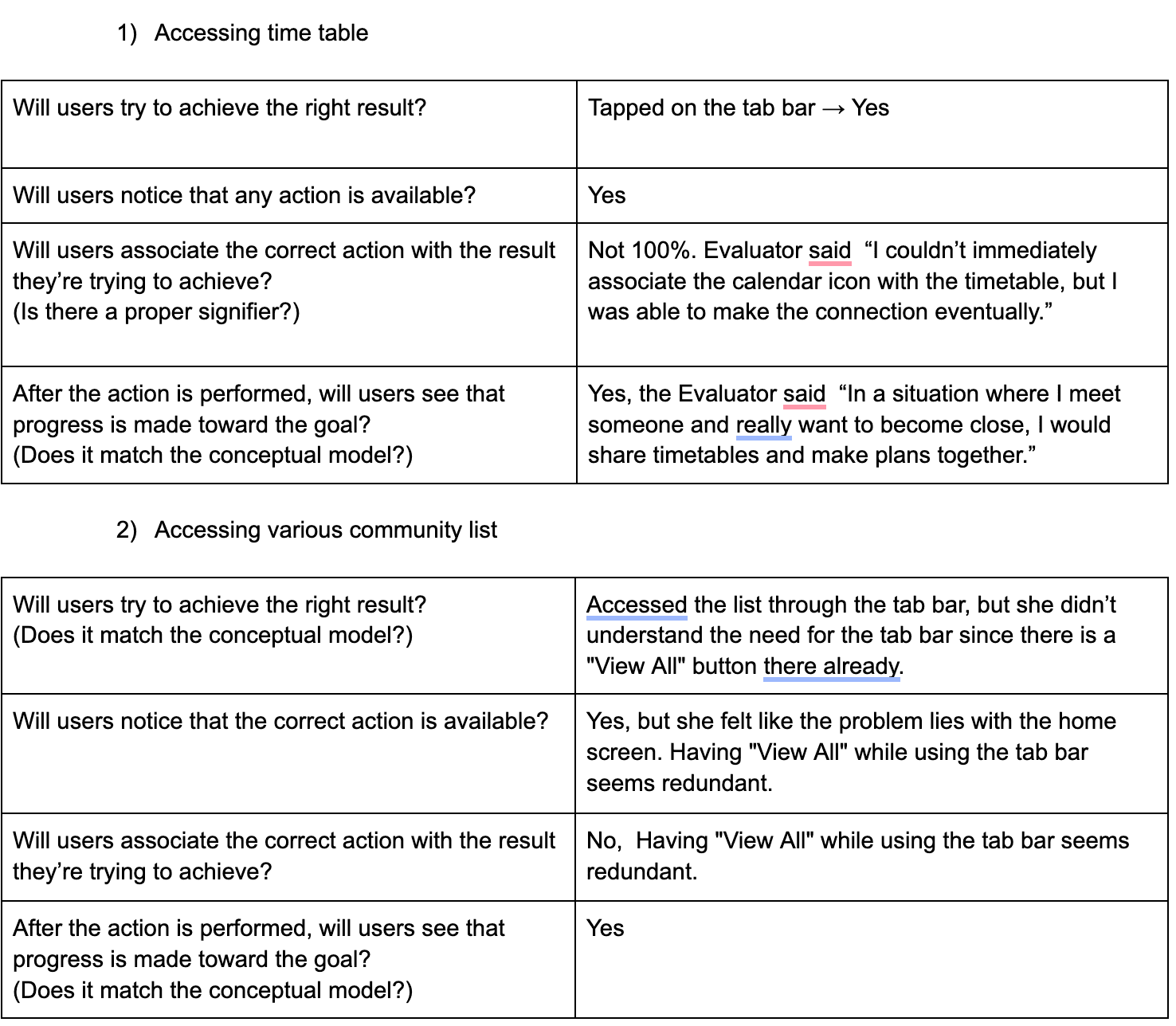
Project 4 was unique as I had to further refine the work done in Project 3 and apply discount methods. Through this project, I gained a deeper appreciation for the importance of feedback. While learning about nondiscount methods during class, it didn't resonate with me much, but applying them directly to my project revealed their significance in gauging learnability and understanding how end-users approach problems or interpret features. It was particularly fascinating when one respondent mentioned that her father, a developer, had used cognitive walkthrough for his own product. This highlighted how the principles and methods learned in class are applied in the real world.
However, I also noticed that the four questions comprising the cognitive walkthrough seemed quite similar, blurring the lines between what they were asking. One respondent even questioned why I was asking the same questions again, indicating a need for clearer differentiation.
Additionally, I came to realize the significance of fonts, colors, and icons. While the initial design of my prototype (Project 3) was simple, feedback from interviews highlighted that the design felt too rigid and formal for a friend-making application. Furthermore, although I believed my icons were intuitive, users interpreted them differently, which made me gather feedback on the icon designs and make adjustments accordingly.
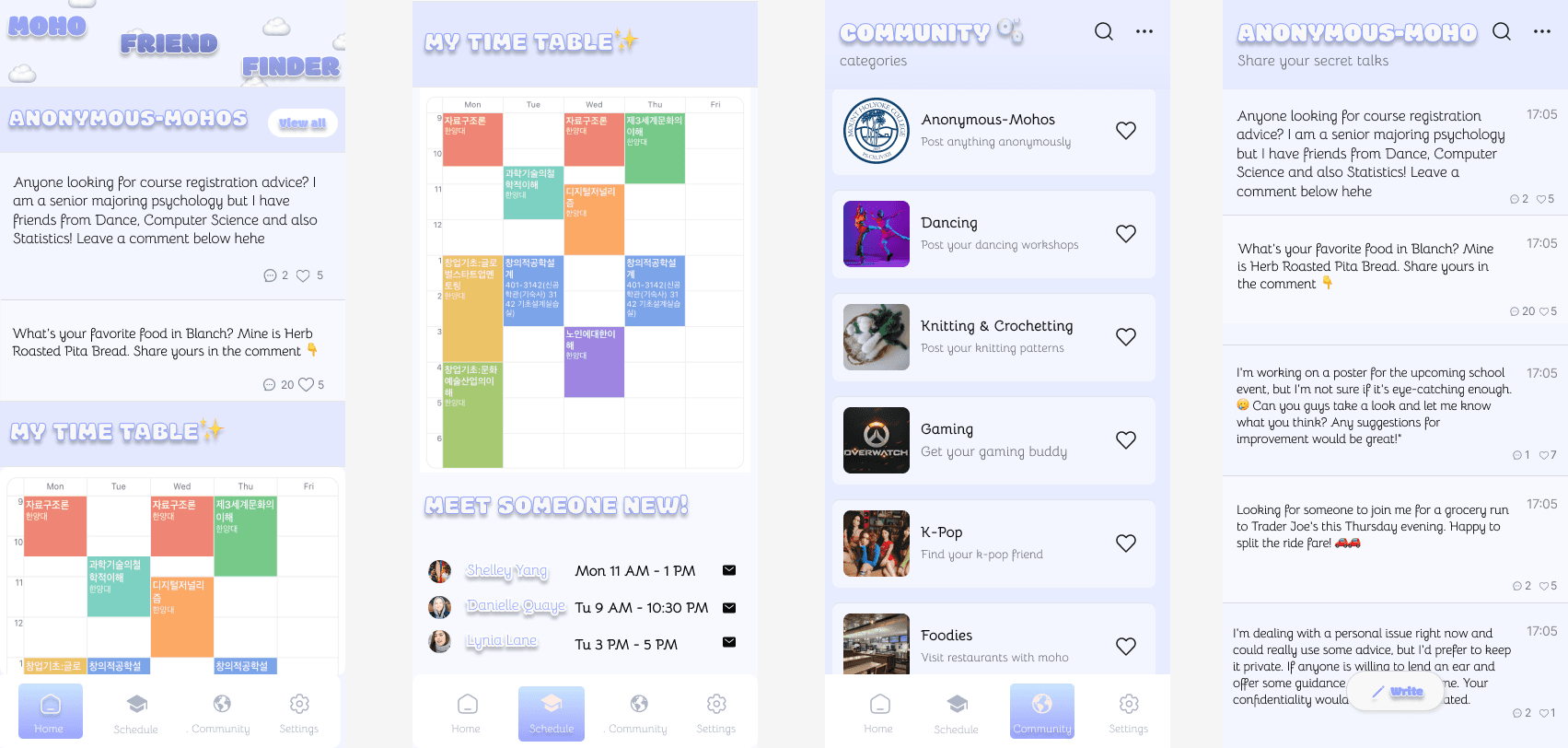
Moreover, I learned that the positioning and number of buttons are crucial. While I initially thought that more buttons would increase utility, users perceived an excess of buttons as suspicious and questioned why there were multiple buttons performing the same function. Project 4 defined additional two stages for my design process - applying designs that effectively discloses the purpose of its use and service and gathering useful feedbacks while ultimately reflecting them accordingly. In my experience, combining non-discount and discount methods together synergized the effectiveness of feedback.
Project 4 defined two additional stages for my design process - applying designs that effectively disclose the purpose of their use and service and gathering useful feedback while ultimately reflecting them accordingly. In my experience, combining non-discount and discount methods together synergized the effectiveness of feedback.